
The World Health Organization (WHO) has validated Bhutan as having eliminated dog-mediated human rabies as a public health problem — the first country in the WHO South-East Asia Region and one of only three countries in the world, with Chile and Mexico, to achieve this milestone. Bhutan has recorded zero human deaths from dog-mediated rabies since June 2023.
For families across Bhutan, this means no longer living with the fear of a fatal dog bite — a threat long familiar to rural communities.The validation, announced ahead of World Rabies Day on 28 September, follows more than a decade of steady
Bhutan's success didn't come from one sector working alone
The turning point came in 2021, when a Royal Decree by His Majesty The King brought veterinarians, De-suung, health workers and communities together under a "One Health" approach, launching the Nationwide Accelerated Dog Population Management and Rabies Control Programme (NADPM&RCP). The programme was spearheaded by the Department of Livestock in partnership with De-suung. His Majesty’s initiative provided a significant impetus to advancing Bhutan’s 2019 pledge towards the global Zero by 30 goal.
“For years, this has been a shared national endeavour, driven by the leadership of His Majesty The King, dedication of our veterinary and health professionals, De-suung volunteers, local governments and communities. Bhutan’s achievement belongs to every one of them. This milestone is not the end, we remain committed to staying vigilant and sustaining our efforts so that no family in Bhutan ever has to fear losing a loved one to rabies again” said the Minister of Health, Ministry of Health, Royal Government of Bhutan.
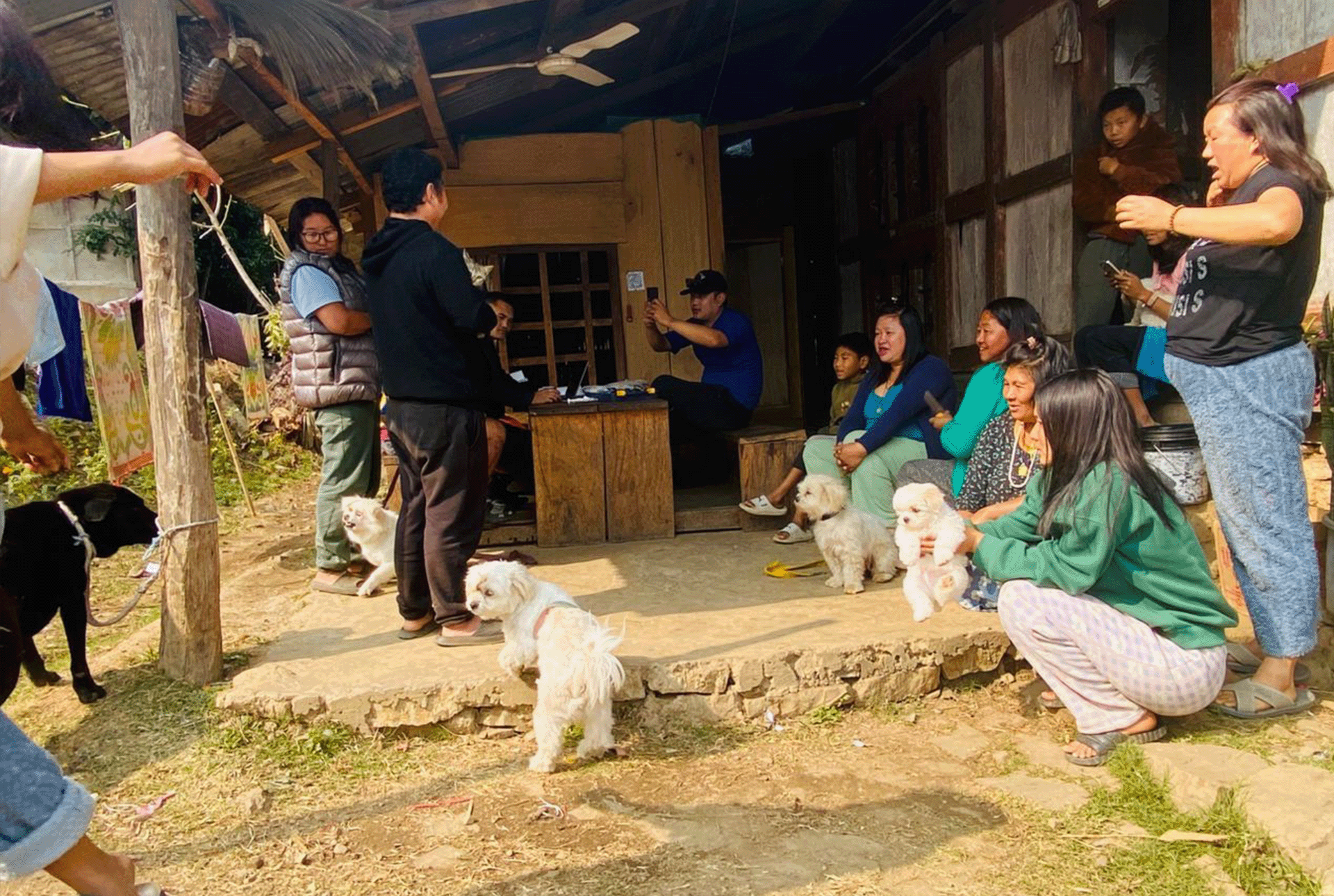 The programme and communities in action: villagers bring their dogs to a registration point during the nationwide NADPM&RCP campaign. Credit: National Accelerated Dog Population Management and Rabies Control Programme, Bhutan.
Making sure treatment was always within reach
At the heart of the programme was a commitment that no one in Bhutan would be turned away from treatment. Post-exposure prophylaxis (PEP) — the wound care, vaccination and, when needed, immunoglobulin that prevents rabies after a bite or scratch — has remained accessible and free of charge across all 20 Dzongkhags (districts), sustained through dedicated financing from the Bhutan Health Trust Fund. Alongside this, Bhutan strengthened surveillance across human and animal health so that any suspected case could be picked up and investigated without delay.
The programme also protected the people delivering it: every De-suung volunteer and livestock worker involved in fieldwork received pre-exposure rabies vaccination before deployment.
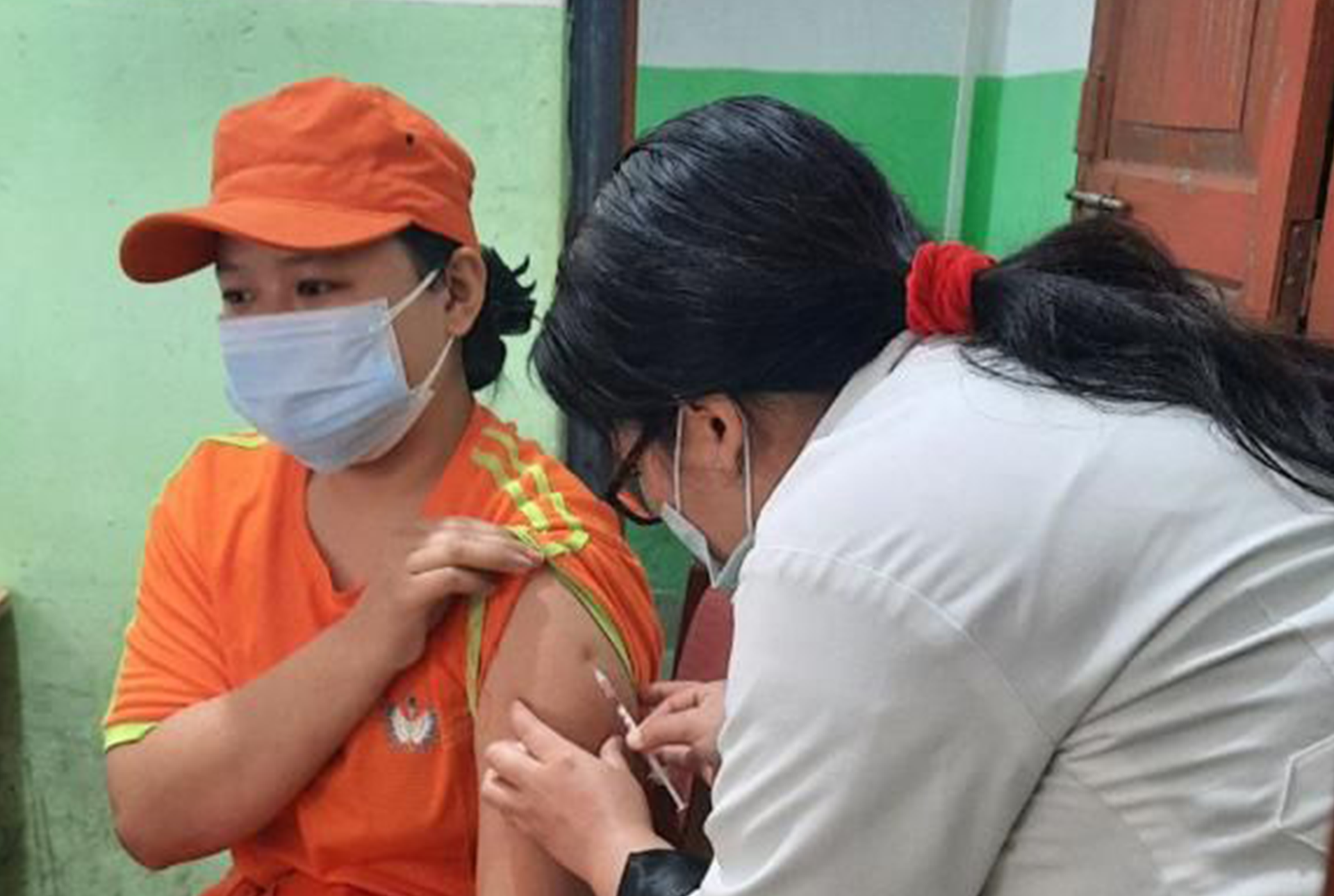 A De-suung volunteer receives intradermal pre-exposure rabies vaccination before joining fieldwork. Credit: National Accelerated Dog Population Management and Rabies Control Programme, Bhutan.
Reaching every corner of the country, together
To break the chain of transmission, Bhutan ran an intensified nationwide campaign that vaccinated more than 90% of the free-roaming dog population — well above the 70% coverage WHO recommends to interrupt the disease's spread.
None of this would have been possible without Bhutan's De-suung (Guardians of Peace) national volunteers, who carried the programme into every corner of the country — often across difficult terrain — from dog census work to public awareness. Local communities played their part too: bringing dogs forward for sterilisation, reporting sightings, and supporting field teams.
Dog population management ran alongside vaccination — large-scale sterilisation, pet microchipping and registration, and responsible pet ownership education — culminating in 100% sterilisation coverage of the free-roaming dog population.
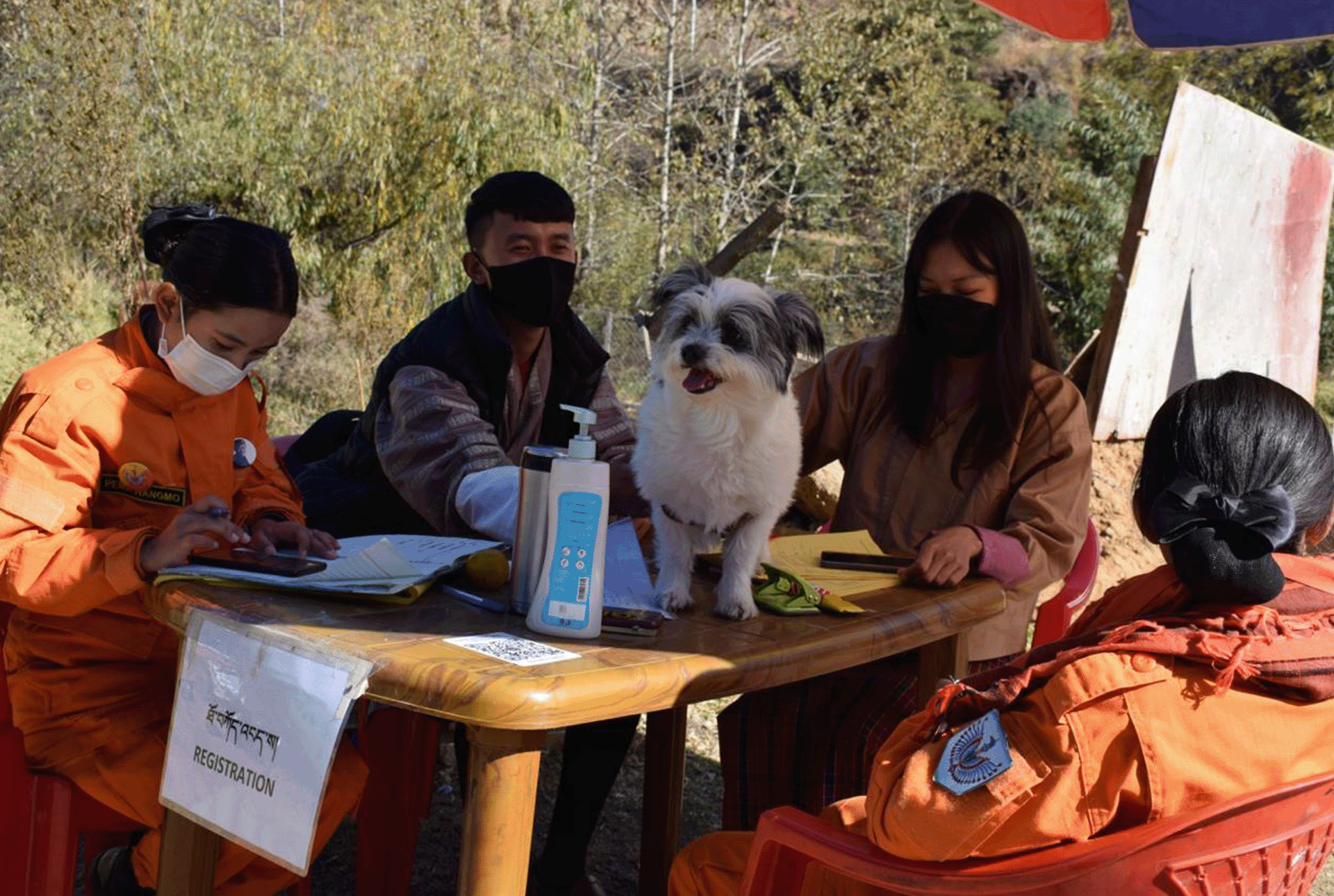
De-suung volunteers record data and issue dog vaccination cards to the community at a mobile registration desk during the nationwide NADPM&RCP campaign. Credit: National Accelerated Dog Population Management and Rabies Control Programme, Bhutan.
How the achievement was verified
The achievement follows a rigorous, independent validation process — a desk review of Bhutan's technical dossier, followed by a field mission across the country in August 2026. Ja.
It confirms not just Bhutan's past success, but the systems now in place to prevent rabies from re-emerging.
Sustaining the gains, and looking ahead
Bhutan's work does not stop with validation — vaccination, population management and surveillance will continue, with closer coordination with neighbouring endemic states to guard against rabies crossing back over the border.
Bhutan's story shows that ending human deaths from dog-mediated rabies is possible — even across mountainous terrain and busy borders — when political will, free treatment, sustained vaccination and community ownership move together. As the world marks World Rabies Day on 28 September under this year's theme, 'Stronger Together,' Bhutan stands as proof of what that looks like in practice: a path other countries can follow to Zero by 30.
 Children gather with their dogs during the nationwide NADPM&RCP campaign. Credit: National Accelerated Dog Population Management and Rabies Control Programme, Bhutan.