Screening and brief intervention for alcohol problems in primary health care
BACKGROUND
There are many forms of excessive drinking that cause substantial risk or harm to the individual. They include high level drinking each day, repeated episodes of drinking to intoxication, drinking that is actually causing physical or mental harm, and drinking that has resulted in the person becoming dependent on alcohol. Excessive drinking causes illness and distress to the drinker and his or her family and friends. It is a major cause of breakdown in relationships, trauma, hospitalization, prolonged disability and early death. Alcohol-related problems represent an immense economic loss to many communities around the world.
Screening for alcohol use: why AUDIT?
The AUDIT was developed as a simple method of screening for excessive drinking and to assist in brief assessment. It can help identify excessive drinking as the cause of the presenting illness. It provides a framework for intervention to help risky drinkers reduce or cease alcohol consumption and thereby avoid the harmful consequences of their drinking. The AUDIT also helps to identify alcohol dependence and some specific consequences of harmful drinking. Of utmost importance for screening is the fact that people who are not dependent on alcohol may stop or reduce their alcohol consumption with appropriate assistance and effort. The manual is particularly designed for health care practitioners and a range of health settings, but with suitable instructions it can be self-administered or used by non-health professionals.
Screening for alcohol consumption among patients in primary care carries many potential benefits. It provides an opportunity to educate patients about low-risk consumption levels and the risks of excessive alcohol use. Information about the amount and frequency of alcohol consumption may inform the diagnosis of the patient's presenting condition, and it may alert clinicians to the need to advise patients whose alcohol consumption might adversely affect their use of medications and other aspects of their treatment. Screening also offers the opportunity for practitioners to take preventative measures that have proven effective in reducing alcohol-related risks.
Development and validation of the AUDIT
The AUDIT was developed and evaluated over a period of two decades, and it has been found to provide an accurate measure of risk across gender, age and cultures. As the first screening test designed specifically for use in primary care settings, the AUDIT has the following advantages:
- Cross-national standardization: the AUDIT was validated on primary health care patients in six countries. It is the only screening test specifically designed for international use;
- Identifies hazardous and harmful alcohol use, as well as possible dependence;
- Brief, rapid and flexible;
- Designed for primary health care workers;
- Consistent with ICD-10 definitions of alcohol dependence and harmful alcohol use;
- Focuses on recent alcohol use.
BRIEF INTERVENTION
Brief interventions are those practices that aim to identify a real or potential alcohol problem and motivate an individual to do something about it. Brief interventions have become increasingly valuable in the management of individuals with alcohol-related problems. During the past 20 years, there have been numerous randomized trials of brief interventions in a variety of health care settings. Studies have been conducted in Australia, Bulgaria, Mexico, the United Kingdom, Norway, Sweden, the United States and many other countries. Results from these studies show that there is clear evidence that well-designed brief intervention strategies are effective, low-cost and easy to administer.
Because research has shown that brief interventions are low in cost and have proven to be effective across the spectrum of alcohol problems, health workers and policy-makers have increasingly focused on them as tools to fill the gap between the primary prevention efforts and more intensive treatment for persons with serious alcohol use disorders. It is worth noting that brief interventions are not designed to treat persons with alcohol dependence, which generally requires greater expertise and more intensive clinical management. However, they might serve well as as initial treatment for severely dependent patients seeking extended treatment.
Alongside with the companion publication on the AUDIT, WHO has also produced a manual to aid primary health care workers in administering brief interventions to persons whose alcohol consumption has become hazardous or harmful to their health. Together, these manuals describe a comprehensive approach to alcohol screening and brief intervention (SBI) that is designed to improve the health of the population and patient groups as well as individuals.
Related activities:
The ASSIST project - Alcohol, Smoking and Substance Involvement Screening Test
Publications
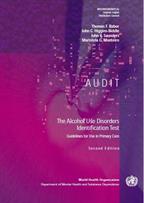
AUDIT : the Alcohol Use Disorders Identification Test : guidelines for use in primary health care
This manual introduces the AUDIT, the Alcohol Use Disorders Identification Test, and describes how to use it to identify persons with hazardous and harmful...
WHO global research priorities and agenda for traditional, complementary and integrative medicine 2025–2034
Traditional, complementary and integrative medicine (TCIM) is used by billions of people worldwide, yet receives less than 1% of global health research...
Closing the childhood cancer survival gap through sustainable access to essential medicines: market shaping...
Childhood cancer remains one of the starkest inequities in global health, with substantial differences in survival across countries and health systems....
Country cooperation strategy for WHO and Jordan, 2026–2030
The Country Cooperation Strategy for WHO and Jordan, 2026–2030, is WHO’s medium-term strategic framework for collaboration with the Government...
Report of the joint meeting of ACSoMP and GACVS June 2026
The Global Advisory Committee on Vaccine Safety (GACVS) was established in 1999, and the Advisory Committee on Safety of Medicinal Products (ACSoMP) was...
WHO guidelines for malaria
The WHO guidelines for malaria bring together the Organization’s most up-to-date recommendations for malaria in one user-friendly and easy-to-navigate...
Teaching with care: a practical guide for teachers to support mental health and well-being in schools
Teachers are often the frontline adults closest to learners, and their everyday interactions can profoundly shape how children and young people feel, learn...
Global mapping of insulin manufacturers
This report presents a global mapping of insulin manufacturers. The report outlines proposed actions that may inform efforts to improve transparency in...
18th edition, Epidemiological Bulletin WHO Health Emergencies Programme WHO Regional Office for South-East...
This epidemiological bulletin aims to provide the situation of key infectious diseases in the WHO South-East Asia region to inform risk assessments and...
Tobacco and infertility
This document is the twelfth in a series of Tobacco Knowledge Summaries and is prepared with the objective to summarize the current evidence on the association...
User manual for the Quick and Immediate Risk Assessment (QIRA) algorithm for Member States
This user manual provides guidance on the application of the World Health Organization’s Quick and Immediate Risk Assessment (QIRA) algorithm, a...
User manual for the Quick and Immediate Risk Assessment (QIRA) algorithm for Member States
.This user manual provides guidance on the application of the World Health Organization’s Quick and Immediate Risk Assessment (QIRA) algorithm, a...
User manual for the Member State Rapid Risk Assessment (MS-RRA) tool
The Member State Rapid Risk Assessment (MS-RRA) tool supports Member States in conducting systematic and timely risk assessments during acute public health...
WHO South-East Asia Region: Climate and Health Regional Profile
The WHO South-East Asia Region: Climate and Health Regional Profile offers an insightful overview of how governments in the Region are progressing in managing...
This systematic review provides a current assessment of peer-reviewed studies published between 2010 and August 2025 investigating potential associations...
Risk reduction of cognitive decline and dementia: WHO guidelines: executive summary, 2nd ed.
This executive summary presents the key recommendations from the second edition of the WHO guidelines on risk reduction of cognitive decline and dementia,...
Integration of equity into national action plans on antimicrobial resistance: guidance to complement...
Antimicrobial resistance (AMR) poses a major threat to global health and development, yet equity remains insufficiently addressed in AMR policy and practice....
WHO emergency guidance on the use of licensed Ebola vaccine during Bundibugyo virus disease outbreaks,...
This updated WHO emergency guidance provides recommendations on the potential use of Ervebo®, the only licensed Ebola vaccine, during outbreaks caused...
Monitoring progress on universal health coverage and the health-related Sustainable Development Goals...
The eleventh annual report on Monitoring progress on universal health coverage and the health-related Sustainable Development Goals in the South-East Asia...
Status of tobacco production and trade in Africa, 2nd ed.
Tobacco growing is damaging the environment and threatening health. As regulations tighten in middle- and high-income countries, tobacco companies are...
Urban yellow fever risk management: handbook for national preparedness and response planning
This handbook provides practical guidance to help countries prepare for and respond to the risk of urban yellow fever outbreaks. It highlights that even...
Related resources
This manual is a companion to ‘The Alcohol, Smoking and Substance Involvement Screening Test (ASSIST): manual for use in primary care’. The...
The Alcohol, Smoking and Substance Involvement Screening Test (ASSIST) was developed for the World Health Organization (WHO) by an international group...
Substance use problems can arise as a result of acute intoxication, regular use or dependence - and from the way in which substances are used. This guide...
Guidelines for identification and management of substance use and substance use disorders in pregnancy
These guidelines contain recommendations on the identification and management of substance use and substance use disorders for health care services which...
mhGAP Intervention Guide - Version 2.0
This is the second version (2016) of the mhGAP Intervention Guide (mhGAP-IG) for mental, neurological and substance use (MNS) disorders in non-specialist...
mhGAP Training Manuals - for the mhGAP Intervention Guide for mental, neurological and substance use...
As part of the Mental Health Gap Action Programme, WHO has developed training manuals (Training of trainers and supervisors training manual and Training...
Involvement of nurses and midwives in screening and brief interventions for hazardous and harmful use...
Psychoactive substance use can result in a wide range of health and social problems for individuals, their families and the wider community. Globally,...