/59748.tmb-300v.png?sfvrsn=9885965b_2 "For the future - publication thumbnail")
Malaysia is bringing countries across the ASEAN and South-East Asia region together to advance a shared vision for integrated lung health, building on the momentum created by the adoption of World Health Assembly Resolution (WHA) 78.5 on promoting and prioritizing an integrated lung health approach.
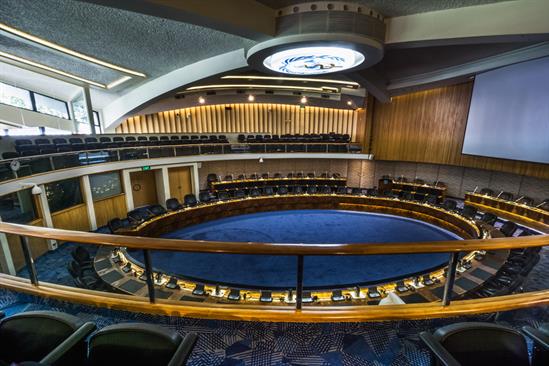
The forum was held during The National Cancer Congress Malaysia 2026 at Sunway University, bringing together more than 1000 healthcare professionals, researchers, policymakers and cancer advocates from Malaysia, South-East Asia, Europe and the Middle East. It was organized jointly by the WHO Office for Malaysia, Brunei Darussalam and Singapore in collaboration with the Ministry of Health Malaysia, National Cancer Society Malaysia (NCSM) and the Lung Ambition Alliance with an aim to bring together partners to exchange experiences, identify common priorities and work together to turn this global commitment into practical action for regional collaboration.
The deliberations helped in shaping the foundations of a shared South-East Asian Progress Framework to support learning, cooperation and implementation of WHA78.5 across the region. Adopted by the Seventy-eighth World Health Assembly in May 2025, WHA78.5 calls on countries to strengthen integrated approaches that address communicable, noncommunicable and occupational lung diseases, while improving prevention, diagnosis, treatment, rehabilitation and access to essential technologies.
/countries/malaysia/malaysia-leading-the-way-for-integrated-lung-health-in-the-region.jpg?sfvrsn=9b9cb58_4 "Malaysia leading the way for Integrated Lung Health in the Region")
His Royal Highness Sultan Nazrin Muizzuddin Shah ibni Almarhum Sultan Azlan Muhibbuddin Shah Al-Maghfur-Lah, Sultan of Perak Darul Ridzuan officiated the launch of coffee table book titled A Breath for the Future: Malaysia’s National Lung Initiative at the forum, along with Dato' Dr Saunthari Somasundaram, President of NCSM, Tan Sri Dato' Seri Sir Dr Jeffrey Cheah KBE AO, Founder and Chairman of Sunway Group, Dr Rabindra Abeyasinghe, WHO Representative to Malaysia, Brunei Darussalam and Singapore and YBrs. Dr Ismuni Bohari, Deputy Director General (Public Health), Ministry of Health Malaysia.
Malaysia has emerged as an early leader in this agenda through its national Lung Health Initiative, which seeks to connect policy, prevention, screening, clinical management, referral systems and information systems into a more coherent approach to lung health. This national experience has provided a strong foundation for Malaysia to convene regional dialogue and facilitate shared learning among countries facing diverse but interconnected respiratory health challenges. Rather than creating rankings or comparing countries, the proposed framework seeks to establish a common language for tracking progress while recognizing the different contexts, capacities and priorities of each country. It is designed to support continuous learning, encourage peer exchange and highlight practical solutions that can improve health outcomes for people living with lung conditions.
Dr Rabindra Abeyasinghe, WHO Representative to Malaysia, Brunei Darussalam and Singapore said “Malaysia has shown that integrated lung health is not only possible, but essential. By bringing together expertise across communicable diseases, noncommunicable diseases, environmental health and primary care, the country is helping demonstrate how a more connected approach can deliver better outcomes for people.”
He added, “through this Forum, Malaysia is providing leadership that extends beyond its borders, creating an opportunity for countries to learn from one another and collectively advance the implementation of World Health Assembly Resolution 78.5. Together, we can build a healthier future where every person has access to comprehensive, people-centred lung health services.”
Lung diseases remain among the leading causes of illness and death globally. Many of these conditions share common risk factors, including tobacco use, air pollution, occupational exposures and respiratory infections. Yet responses are often fragmented across separate programmes and sectors. An integrated approach helps connect prevention, early detection, diagnosis, treatment and long-term care around the needs of people and communities.
Through this Forum, Malaysia is demonstrating how national leadership can help translate global commitments into meaningful regional cooperation. By creating space for dialogue, innovation and shared problem-solving, the country is helping shape a future where lung health is addressed more comprehensively across South-East Asia, while ensuring that national ownership and priorities remain at the centre of action.